The Story Behind Def Jam's Worst Selling, and Most Misunderstood, Album Ever
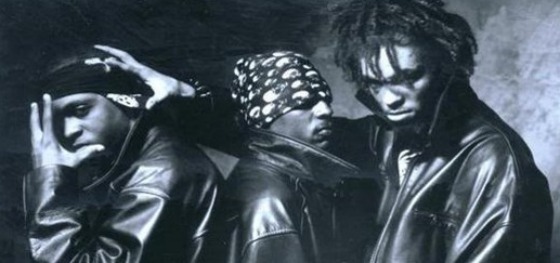
from Village Voice recently wrote an in-depth article about the Flatlinerz. In this article Chaz writes about the early history of the group. He also discusses the lack of sales for their "USA (Under Satan's Authority)" album.
I've posted the full article below.
From Village Voice:
Storied hip-hop label Def Jam Records has spent the month of October celebrating its 30th anniversary. While there's been much cheer for all the label's iconic and groundbreaking releases, one album's received nothing but scorn and ridicule ever since it hit store shelves two decades ago. Often the go-to punching bag for Def Jam flops, even with its 20th anniversary passing by, nobody is willing to give it and its legacy the time of day. Our tale begins not unlike many other New York rap legends. In the early-to-mid 1980s, future Flatlinerz Tempest, Gravedigger, and Redrum were being swept up into the burgeoning golden age of rap like the rest of us. For Redrum, nephew of Def Jam co-founder Russell Simmons and rap icon Run of Run-DMC, one would assume there would be more of a personal connection, but this is the first of many misconceptions of the Flatlinerz's history. "I didn't meet my father until I was 11-years-old" Redrum tells us, "and Run and Russell were my father's younger brothers, so I didn't have any access to that side of the family. By that time, I already had a relationship with hip-hop and my mother and my step-father were not into rap." From there, the widespread misconception is that Flatlinerz were rappers who adopted the "horrorcore" gimmick. Like horror movies, the truth is far more interesting than the fiction. Longtime Brooklyn neighborhood friends, Redrum, and Gravedigger opted to start a gang long before the three of them had interest in rapping. Only they didn't want to go through the beat-down hazing initiations of other New York gangs at the time, so they started The Flatlinerz. Their neighborhood was heavily policed, and the young collective began making a nearby cemetery their hangout. It was only at the cemetery that the group began rhyming, and as Redrum told us, the occult topics were there from the start. "I was learned by a gentleman name Malachai York, [he] always touched on a lot of esoteric topics, so I was always pointed in the occult and ancient knowledge. From that foundation, coming up into rap, I was enjoying mythology and horror and it gelled into who I am as a person." From there they linked up with Queens producer Tempest, and Flatlinerz the rap group was spawned. While Uncle Russell was complimentary, he didn't see investment potential in Flatlinerz. It ironically took Run's DJ Jam-Master Jay, after the success he had managing Def Jam's first successful hardcore gangsta group Onyx, to book Flatlinerz on their shows that made Simmons interested in bringing them to Def Jam. While the alleged nepotism got the group mocked in some circles, including on Saturday Night Live, the group had to make their journey to the label the hard way. Of course, once Def Jam began the promotional campaign for USA, the group's only album, they were pushed as the horror movie of hip-hop. "We wanted to introduce and expose black people particularly into these occult themes that were already playing out in society, unknowingly to the people it was affecting." The group's videos, which MTV wouldn't touch but found regular rotation on The Box, featured the members hung, crucified and possessed by demons, 15 years before such shocking imagery became regular go-tos for Odd Future, A$AP Mob, and Kanye West. As a result, these campaigns saw the group received as face-value shock artists and the album's title, Under Satan's Authority, was perceived as the group not pointing out the rampant Satanism in the country, but as if they were Satanists themselves. With no radio and limited video play, the drastically different subject matter found the group only invited to media platforms that didn't typically play music, furthering pigeon-holing them as a novelty. Despite Def Jam's continued efforts to push "horrorcore," which Gravedigger summed up as originally intended to be the group "exposing what was really going on in the hoods and in the industry, real life situations, with horror," the album only went on to sell 36,000 copies. Redrum chalks the low sales to the music being marketed to black people. "Black people are a bit more religious and are not accepting of any occult topic. The main problem was people were scared to death they would go to Hell." Revisiting USA today, the album sounds like it would fit right in with much of 2014's soundscape. Largely produced by future super producers Rockwilda ("Lady Marmalad") and DR Period (M.O.P.'s "Ante Up") the album not only predates more famous rappers to the punch for samples for future hits (listen to "Scary-Us" and then Busta Rhymes' "Dangerous") but the production on the video game sampling "Sonic Boom" and "Takin' 'Em Underground" are essentially proto-Nerdcore. The failure of the the album didn't affect the group's relationship with Uncle Russell, who himself still defends the record's singles whenever the subject comes up. Even though mainstream fans are still struggling to accept Flatlinerz and horrorcore as a whole, the group has re-released USA with additional tracks (including one featuring EPMD's Erick Sermon) along with the hopes that they are no longer mistaken for Satan worshippers. "[Horrorcore is] more about observing the dynamic of the energy we call evil. If we're evil, what are we going to get out of that? We're approaching topics a little bit more than your average Satanism," Redrum clarifies. "What you hear guys talking about on the radio is guys talking about Satanism. Killing each other, ritualistic drugs, ritualistic sex. You turn on the radio, every song is about having sex with your woman, or your wife, that's Satanism." While there is an on-going debate as to Horrorcore's origins, whether it be from Flatlinerz or their contemporaries like Gravediggaz or Esham, Redrum thinks the bigger picture is that these questions are still being asked. "It doesn't matter what the answer to those questions are. In terms of the term 'horrorcore,' I remember sitting with 'Digger and making that up. As far as the term, we did that. We didn't sell a million records like ICP, but let us have our shit man. We made the term."
Comments 0
Loading comments…